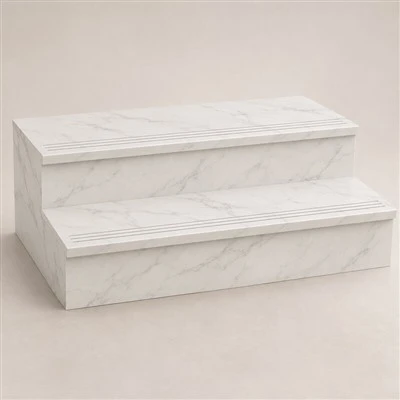
Travertine look sintered stone combines the warm colors and linear patterns of natural travertine with the dense structure of an engineered mineral surface. It is available in large-format slabs and tiles for residential interiors, hotels, retail spaces and commercial architectural projects.
Natural travertine offers genuine mineral variation and naturally formed pores, while sintered stone provides a more controlled decorative pattern, low water absorption and generally simpler maintenance.

Natural Travertine Style with Easy Surface Care
Beige, ivory and cream tones create a warm architectural appearance. Large slab formats allow the characteristic linear movement of travertine to continue across floors, walls and furniture surfaces.
What Is Travertine Look Sintered Stone?
Travertine look sintered stone is an engineered surface produced from mineral-based raw materials through compaction and high-temperature sintering. Its decorative face reproduces the layered appearance, subtle color changes and mineral textures associated with natural travertine.
Unlike quarried travertine, the characteristic pore-like marks on a sintered stone design do not necessarily represent open cavities. Depending on the finish, they may appear as decorative graphics, shallow surface texture or a combination of both.

Linear Vein-Cut Appearance
Horizontal ivory and beige bands create the characteristic visual movement of vein-cut travertine.

Fine Mineral Texture
Soft relief, fine grooves and subtle pore-like details give textured finishes a natural stone character.
Travertine Look Sintered Stone vs Natural Travertine
Natural travertine is a limestone formed by the precipitation of calcium carbonate. Its natural cavities, mineral bands and tonal variation make each piece distinctive. Sintered stone reproduces this appearance in a manufactured slab with different physical and maintenance characteristics.
| Property | Travertine Look Sintered Stone | Natural Travertine |
|---|---|---|
| Material | Manufactured mineral-based surface. | Naturally formed limestone. |
| Appearance | Controlled travertine-inspired graphics and textures. | Unique natural bands, cavities and mineral variation. |
| Porosity | Generally dense with very low water absorption. | Naturally porous, with absorption varying by stone and finish. |
| Surface Sealing | Generally does not require routine penetrating sealer. | Sealing is often recommended according to the application. |
| Acid Resistance | Generally more resistant to common household acidic substances. | Calcium carbonate can react with acidic liquids. |
| Pattern Consistency | Greater control over repeated designs and production faces. | Natural variation between blocks and slabs. |
| Available Formats | Manufactured slab and tile formats. | Slabs and tiles limited by quarried block dimensions. |
| Edge Appearance | Depends on the slab body and decorative manufacturing method. | Natural mineral structure continues through the stone. |
| Maintenance | Water, mild detergent and compatible cleaning products. | Stone-compatible cleaners and periodic surface care. |
Sintered stone is an attractive option for projects requiring a controlled decorative appearance and lower routine maintenance. Natural travertine remains suitable for designs where authentic quarried material and individual stone variation are essential.
Vein-Cut and Cross-Cut Travertine Designs
Vein-Cut Travertine Look
Fine parallel bands create a directional appearance. This style works well across long walls, corridors, kitchen islands and large architectural panels.
Cross-Cut Travertine Look
Cloud-like mineral patterns and softer tonal movement provide a less directional appearance for floors, furniture and coordinated interiors.
White and Ivory Travertine Look
Pale ivory designs create a bright interior palette and complement light timber, warm metallic finishes and minimal cabinetry.
Warm Beige Travertine Look
Cream and beige tones suit hotel interiors, residential living spaces and commercial projects with warm natural material palettes.
Travertine Look Sintered Stone Applications
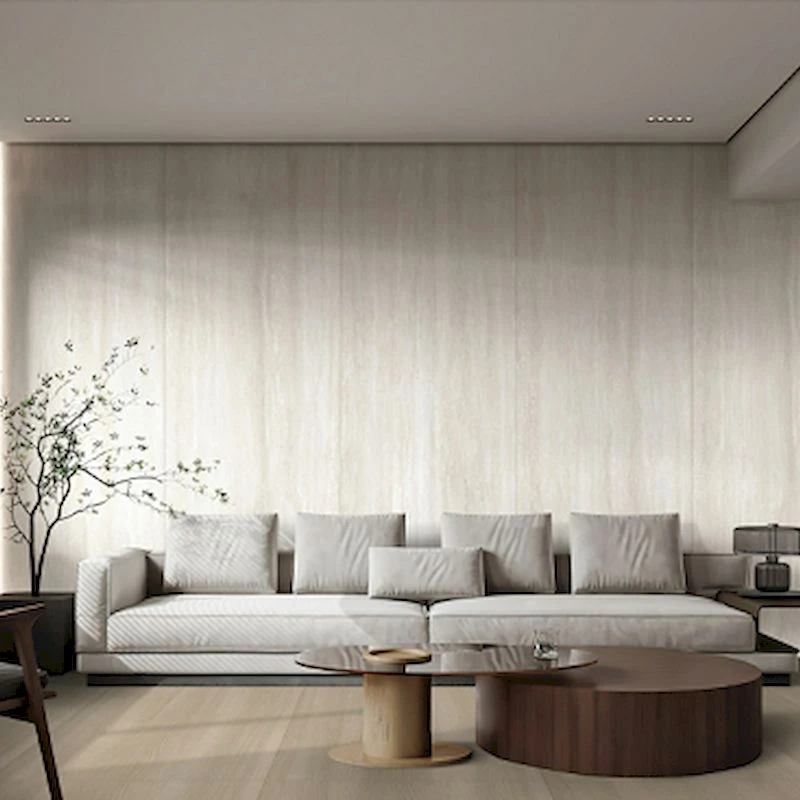
Interior Wall Cladding
Travertine-inspired wall panels provide a warm background for living rooms, hotel suites, reception areas and commercial interiors.
Large-format slabs can reduce visible joints across broad walls. Horizontal vein patterns emphasize wall width, while vertical orientation creates a taller visual appearance.
View Sintered Stone Wall Tiles »Kitchen Countertops and Furniture
Travertine look surfaces combine well with natural timber, neutral cabinets, dark metal and brushed decorative fittings.
Suitable large-format slabs can be fabricated for kitchen islands, countertops, dining tables, vanity tops and furniture panels. Matching finishes can connect horizontal and vertical surfaces throughout an interior.
View Sintered Stone Countertops »
Commercial Flooring
Beige and ivory travertine designs suit hotel corridors, retail interiors and residential floors. Floor-rated products require appropriate slip resistance and installation specifications.
Bathroom and Vanity Surfaces
Low-absorption decorative slabs can be used for vanity surfaces and suitable bathroom wall systems, with separate waterproofing for wet areas.
Hotel and Retail Interiors
Repeated warm-toned patterns allow coordinated interior finishes across guest rooms, public areas, retail displays and furniture collections.
Exterior Wall Applications
Selected exterior-rated travertine look slabs may be used in facade systems with suitable mechanical support, weather resistance and structural approval.
Matte, Honed and Textured Travertine Finishes
Surface finish affects reflection, texture, cleaning characteristics and the overall appearance of travertine-inspired slabs.
| Finish | Surface Appearance | Typical Applications |
|---|---|---|
| Matte | Soft reflection and a restrained natural stone appearance. | Interior walls, furniture and suitable floor surfaces. |
| Honed | Smooth surface with a subtle sheen. | Countertops, vanity areas and decorative walls. |
| Hammered or Textured | Fine relief and tactile mineral characteristics. | Feature walls, architectural panels and furniture finishes. |
| Polished | Higher reflection with more pronounced visual depth. | Decorative walls and suitable horizontal surfaces. |
Matte and honed finishes are popular for interiors seeking the understated character of traditional travertine. Textured finishes offer additional tactile detail, while polished surfaces create a more reflective decorative effect.
Available Travertine Look Slab Sizes and Thicknesses
Large-format travertine look sintered stone is available in different slab dimensions and thicknesses across the Jinovation Stone product range.
| Product | Listed Slab Formats | Listed Thickness Options |
|---|---|---|
| Roman Travertine Sintered Stone | 1200 × 2400 mm 1600 × 3200 mm |
6 mm and 12 mm common listed options. Other options subject to confirmation. |
| Travertino Navona White | 3240 × 1620 mm 3200 × 1600 mm rectified option |
6 mm / 12 mm |
Available dimensions, thicknesses and finishes may vary by product and production batch. Wall panels, countertops and furniture tops require thicknesses compatible with their support and installation systems.
Related information: Sintered Stone Thickness Guide: 6 mm vs 12 mm vs 20 mm
Travertine Vein Direction and Large-Format Panel Layout
Linear travertine patterns create a continuous appearance when adjacent panels have compatible band direction and color. Changes in orientation are more noticeable across long walls, kitchen islands and large flooring areas.

Continuous Horizontal Pattern
Matching band heights across adjoining panels gives long wall surfaces a consistent directional appearance.
Vertical Panel Orientation
Vertical bands work well on tall feature walls, narrow columns and full-height architectural panels.
Corner and Edge Transitions
Coordinated cutting positions help maintain the relationship between wall panels, exposed edges, furniture fronts and adjoining surfaces.
Large projects also require batch consistency. Differences in background tone, surface reflection and band position become more noticeable when several slabs are installed side by side.
Cleaning and Maintenance Compared with Natural Travertine
Travertine look sintered stone generally requires less surface maintenance than porous natural travertine. Routine cleaning uses water, mild detergent and a soft cloth or suitable cleaning pad.
Natural travertine requires cleaners compatible with calcium carbonate. Acidic substances such as vinegar and lemon juice can etch the surface. Porous or filled travertine may also require periodic sealing and maintenance of filled areas.
| Maintenance Item | Travertine Look Sintered Stone | Natural Travertine |
|---|---|---|
| Everyday Cleaning | Soft cloth, water and mild detergent. | Mild stone-compatible cleaner. |
| Sealing | Generally unnecessary for the slab itself. | Often recommended according to porosity and use. |
| Surface Pores | Decorative graphics or manufactured texture. | Natural cavities may require filling or additional cleaning. |
| Acid Exposure | Product-specific chemical resistance. | Susceptible to acid etching. |
| Local Repairs | Edge repairs or replacement depend on the damage. | Selected surfaces may be filled, honed or professionally refinished. |
Is Travertine Look Sintered Stone Cheaper Than Natural Travertine?
The total price depends on the material grade, slab size, thickness, finish, fabrication, shipping and installation. Premium sintered stone slabs are not necessarily cheaper than all natural travertine products.
For hotels, retail chains and multi-unit residential developments, manufactured patterns can offer advantages in repeat ordering and material coordination. Low-maintenance surfaces may also reduce some long-term care requirements.
Material Cost
Slab design, available format, thickness and surface finish influence the base material price.
Fabrication Cost
Cutting, edge treatment, shaped pieces and directional pattern requirements affect processing costs.
Material Yield
Finished component dimensions and vein direction determine how efficiently a slab can be used.
Long-Term Maintenance
Cleaning frequency, sealing requirements and repair options contribute to the total cost of ownership.
Travertine Look Sintered Stone for Wholesale Orders
| Order Specification | Available Information |
|---|---|
| Design | Roman Travertine, Travertino Navona White and other available travertine-inspired patterns. |
| Color | Beige, ivory, cream and selected warm neutral tones. |
| Slab Size | Available large-format dimensions according to product selection. |
| Thickness | Product-specific options for wall panels, countertops and furniture applications. |
| Surface Finish | Matte, honed, polished or selected textured finishes. |
| Supply Format | Full slabs, tiles or project-specific fabricated components subject to confirmation. |
| Pattern Direction | Horizontal or vertical vein orientation, repeated faces and coordinated panel layouts. |
| Packaging | Protective export packaging matched to slab dimensions and shipment requirements. |
| Quantity and Delivery | Project quantity, production availability, destination and shipment schedule. |
Explore Our Travertine Look Sintered Stone Collection
Roman Travertine Sintered Stone
Warm beige tones and natural linear movement for contemporary residential and commercial interiors.
View Product »Travertino Navona White
Soft ivory bands and a lightly textured surface for coordinated walls, kitchens and furniture designs.
View Product »Large-Format Sintered Stone Slabs
A range of stone-inspired patterns and slab specifications for architectural and wholesale applications.
View Collection »Frequently Asked Questions
Is travertine look sintered stone real travertine?
No. It is an engineered mineral surface that reproduces the appearance of natural travertine. Natural travertine is quarried limestone, while sintered stone is manufactured through compaction and high-temperature processing.
Does travertine look sintered stone need sealing?
The sintered stone surface generally does not require routine penetrating sealer. Joints and surrounding installation materials may have separate maintenance requirements.
Is sintered stone more stain resistant than natural travertine?
Sintered stone generally has lower water absorption and better resistance to many everyday stains. Performance depends on the selected finish and product specification.
Can travertine look sintered stone be used for flooring?
Yes. Suitable floor-rated products can be used for residential and commercial flooring. Slip resistance, surface durability and installation requirements depend on the application.
Can travertine look slabs be used for kitchen countertops?
Suitable products can be fabricated into kitchen countertops and islands with appropriate thickness, structural support, edge processing and installation details.
What is the difference between vein-cut and cross-cut travertine designs?
Vein-cut designs feature directional linear bands. Cross-cut designs feature more cloud-like and irregular mineral patterns with less pronounced direction.
Does travertine look sintered stone have natural holes?
Pore-like features are generally reproduced through decorative graphics or controlled surface textures. They are not necessarily the same as the naturally formed cavities found in quarried travertine.
Can I order matching travertine look slabs for multiple rooms?
Coordinated batches and matching decorative designs can be requested for multi-room projects. Available faces, quantities, finish and batch consistency are subject to order confirmation.
What affects the wholesale price of travertine look sintered stone?
Prices depend on the selected design, slab dimensions, thickness, surface finish, fabrication scope, order quantity, packaging and shipment destination.
Source Travertine Look Sintered Stone from Jinovation Stone
Explore beige, ivory and warm natural stone-inspired slabs for countertops, wall cladding, flooring and furniture projects. Contact us with your preferred design, slab size, thickness, finish, required quantity and destination for product samples and wholesale quotations.
Request a Quote