

Introduction
One of the first questions architects, fabricators, and homeowners ask when choosing sintered stone is:
What thickness should I use-6mm, 12mm, or 20mm?
The answer depends on much more than appearance.
Thickness affects:
- Structural strength
- Weight
- Fabrication method
- Installation cost
- Transportation risk
- Long-term performance
Choosing the wrong thickness can lead to unnecessary cost, difficult installation, or even fabrication problems.
This guide explains the real differences between 6mm, 12mm, and 20mm sintered stone and helps you select the right option for countertops, wall cladding, flooring, furniture, and commercial projects.
Quick Comparison: 6mm vs 12mm vs 20mm
| Thickness | Typical Weight | Best Applications | Cost Level |
|---|---|---|---|
| 6mm | ~14-15 kg/m² | Wall cladding, feature walls, furniture panels | $ |
| 12mm | ~28-30 kg/m² | Kitchen countertops, vanity tops, tables | $$ |
| 20mm | ~46-50 kg/m² | Heavy-duty flooring, commercial counters, structural furniture | $$$ |
The biggest mistake buyers make is assuming that thicker always means better.
In reality, the best thickness is the one that matches the load, span, and installation method of the project.
What Does Thickness Change?
Sintered stone is manufactured under the same high-pressure, high-temperature process regardless of thickness. A 6mm slab is not made from lower-quality material than a 12mm slab.
Thickness mainly changes:
- Bending resistance
- Impact resistance
- Load-bearing capacity
- Weight
- Fabrication flexibility
Think of it this way:
- 6mm = lightweight skin
- 12mm = balanced performance
- 20mm = heavy-duty structural surface
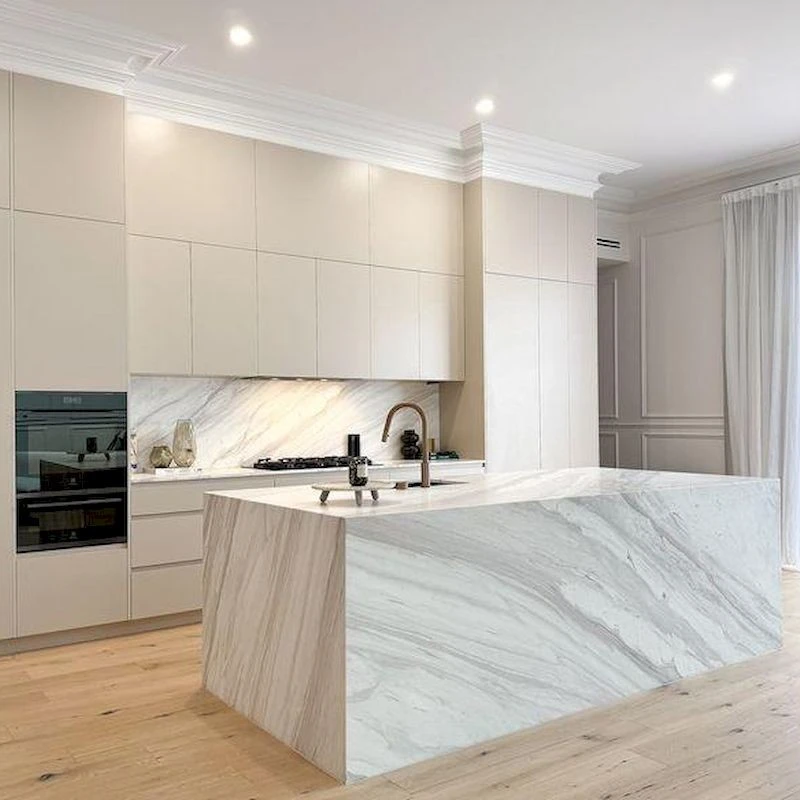
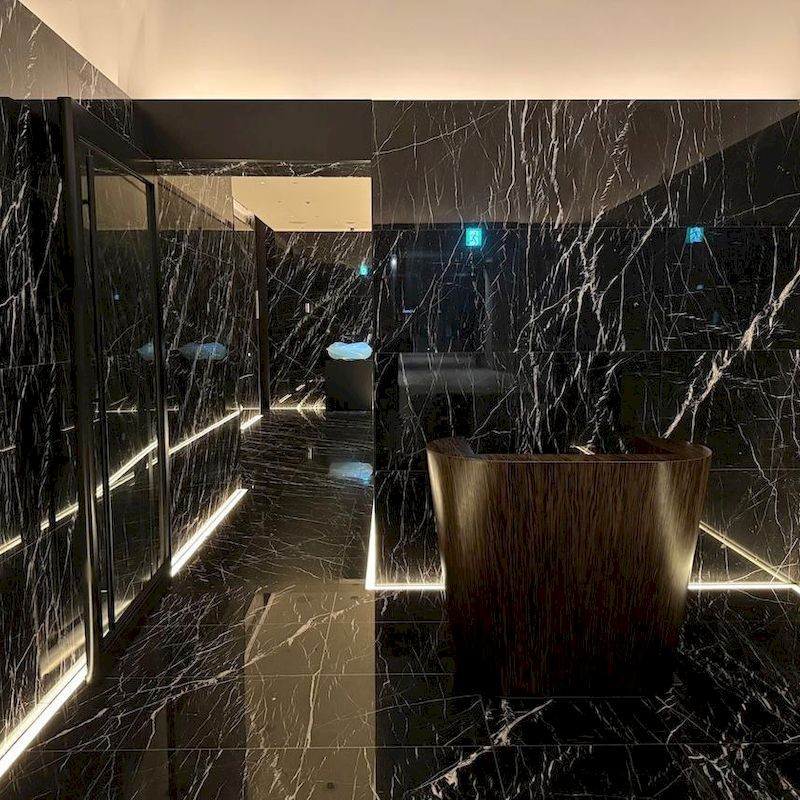

6mm Sintered Stone
Best for Vertical Applications
6mm is the most common choice for wall cladding and decorative surfaces.
Recommended Applications
- Interior feature walls
- Bathroom wall panels
- Kitchen backsplashes
- Exterior ventilated facades
- Cabinet and furniture panels
Advantages
- Lightweight
- Easier transportation
- Faster installation
- Lower structural load on walls
- More economical for large areas
Limitations
A 6mm slab is not designed for unsupported countertop spans. Although it has excellent surface hardness, it has less resistance to bending under heavy point loads.
When I Recommend 6mm
Choose 6mm when the slab is fully supported by a wall, substrate, or backing panel.
This is the thickness we typically recommend for:
- Large-format wall cladding
- Hotel feature walls
- Bathroom shower walls
- Exterior facade systems
12mm Sintered Stone
The Industry Standard for Countertops
If you only remember one thickness, remember 12mm.
This is the thickness used by most premium sintered stone countertop brands worldwide.
Recommended Applications
- Kitchen countertops
- Kitchen islands
- Bathroom vanity tops
- Dining tables
- Coffee tables
- Commercial worktops
Why 12mm Is So Popular
It provides the best balance between:
- Strength
- Weight
- Fabrication ease
- Edge appearance
- Cost
Typical Performance
A properly supported 12mm slab can easily handle normal residential and commercial countertop loads.
Fabrication Advantages
12mm is thick enough for:
- Sink cut-outs
- Hob cut-outs
- Waterfall edges
- Mitred edge fabrication
- Integrated design details
This is especially important for Full Body Sintered Stone, where the edge pattern remains visible after cutting.
When I Recommend 12mm
For 90% of kitchen and bathroom projects, 12mm is the safest and most cost-effective choice.
20mm Sintered Stone
Heavy-Duty Performance
20mm is designed for applications that require additional mass, stiffness, and load-bearing capacity.
Recommended Applications
- Commercial reception counters
- High-traffic flooring
- Outdoor countertops
- Stair treads
- Structural furniture pieces
- Large-span table tops
Advantages
- Higher rigidity
- Better resistance to impact
- Reduced deflection over long spans
- Premium thick-edge appearance
Important Trade-Off
The biggest downside is weight.
A 20mm slab is roughly 65-70% heavier than a 12mm slab.
That affects:
- Shipping cost
- Manual handling
- Installation labor
- Cabinet requirements
- Structural support
When I Recommend 20mm
Use 20mm when the project involves:
- Very large unsupported spans
- Heavy commercial use
- Outdoor installations with higher impact risk
- A design that specifically requires a thick visual profile
Which Thickness Is Strongest?
In terms of bending resistance, 20mm is the strongest.
However, sintered stone is already an extremely hard material. For many residential applications, the practical performance difference between 12mm and 20mm is smaller than people expect.
For example:
A kitchen island with proper support: 12mm is usually sufficient
A 3-meter commercial reception desk with minimal support: 20mm may be preferable
Weight Matters More Than Most Buyers Realize
Approximate Weight per Square Meter
| Thickness | Weight |
| 6mm | 14-15 kg/m² |
| 12mm | 28-30 kg/m² |
| 20mm | 46-50 kg/m² |
For a large 3200×1600mm slab:
- 6mm: ~72 kg
- 12mm: ~145 kg
- 20mm: ~240 kg
That is a huge difference during unloading, fabrication, and installation.
Thickness and Edge Design
This is where many articles stop, but edge design is critical.
6mm
Usually used with:
- Minimal exposed edges
- Aluminum profiles
- Backed panel systems
12mm
Ideal for:
- Straight polished edges
- Beveled edges
- Bullnose edges
- Waterfall mitred edges
20mm
Best for:
- Thick luxury profiles
- Deep edge details
- Heavy-duty commercial aesthetics
For Calacatta White Full Body Sintered Stone, 12mm is often the sweet spot because it shows the veining beautifully without the excessive weight of 20mm.
Indoor vs Outdoor Recommendations
Indoor Residential
| Area | Recommended Thickness |
| Feature Wall | 6mm |
| Bathroom Wall | 6mm |
| Kitchen Countertop | 12mm |
| Vanity Top | 12mm |
| Dining Table | 12mm |
Outdoor & Commercial
| Area | Recommended Thickness |
| Exterior Facade | 6mm |
| Outdoor Kitchen | 12mm |
| Commercial Counter | 20mm |
| High-Traffic Flooring | 20mm |
| Stair Treads | 20mm |
Does Thicker Mean Longer Lifespan?
Not necessarily.
A correctly installed 6mm wall panel can last decades, while a poorly supported 20mm countertop can still fail.
Lifespan depends more on:
- Installation quality
- Support structure
- Fabrication accuracy
- Edge treatment
- Impact exposure
How Fabricators Choose Thickness
Professional fabricators usually start with support conditions, not aesthetics.
Choose 6mm if:
- The slab is fully bonded to a substrate.
- Weight reduction is important.
- The project is primarily decorative.
Choose 12mm if:
- The slab will function as a countertop or tabletop.
- Cut-outs are required.
- You want the best balance of performance and cost.
Choose 20mm if:
- The span is unusually large.
- The environment is heavy commercial.
- Additional rigidity is required.
- The design demands a thick premium appearance.
Frequently Asked Questions
Is 6mm too thin for a kitchen countertop?
For a primary countertop, yes. Most manufacturers recommend 12mm or thicker for kitchen worktops.
Is 12mm strong enough for a waterfall island?
Yes. When properly fabricated and supported, 12mm is the industry standard for waterfall kitchen islands.
Is 20mm worth the extra cost?
Only when the project truly requires additional stiffness, impact resistance, or a thick-edge aesthetic.
Which thickness is easiest to install?
6mm is the easiest for wall applications, while 12mm is generally the easiest for countertop fabrication and installation.
Can different thicknesses be used in the same project?
Absolutely. Many premium projects use:
- 6mm for wall cladding
- 12mm for countertops and vanities
- 20mm for stairs or heavy-use commercial surfaces
This approach optimizes both performance and budget.
Conclusion
There is no universally "best" sintered stone thickness.
6mm is the ideal choice for wall cladding and lightweight decorative applications.
12mm is the industry standard for kitchen countertops, bathroom vanity tops, and furniture because it offers the best balance of strength, weight, fabrication flexibility, and cost.
20mm is reserved for heavy-duty commercial, structural, and large-span applications where additional rigidity and impact resistance are required.
For most residential projects, 12mm is the thickness I would recommend first. It delivers excellent performance without the installation and transportation challenges associated with thicker slabs.


