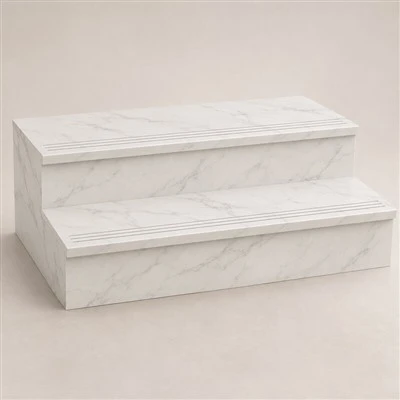
Sintered stone table tops are made from dense mineral-based slabs used for dining tables, coffee tables, desks and commercial furniture. Available marble-look, travertine-look and solid-color designs give furniture manufacturers a wide range of decorative surface options.
Table top performance depends on the slab thickness, finished dimensions, edge treatment and supporting frame. A well-designed table combines the decorative surface with a stable base and suitable load support.
Why Choose Sintered Stone Table Tops?
Low Water Absorption
Dense sintered surfaces have low water absorption and are suitable for many dining, furniture and hospitality applications.
Everyday Surface Durability
Suitable sintered stone finishes offer resistance to common household stains and everyday surface wear. Finished edges remain vulnerable to hard impacts.
Easy Routine Cleaning
Most food residue and beverage spills can be removed with water, mild detergent and a soft cloth.
Natural Stone Appearance
Marble-inspired veins, travertine patterns and subtle mineral textures complement different furniture collections.
Custom Shapes and Edges
Table surfaces can be fabricated into different shapes with straight, beveled or rounded edges, depending on the selected material and processing method.
Coordinated Furniture Collections
Matching surface designs can be used across dining tables, coffee tables, side tables and other furniture pieces.
Common Applications of Sintered Stone Table Tops
Dining Tables
Large-format stone surfaces for residential dining rooms, restaurants and hotel dining areas. Rectangular, oval and round designs are common.
Coffee Tables
Decorative surfaces for living rooms, hotel lounges and reception areas. Smaller formats allow a wide range of shapes and base designs.
Side and Console Tables
Compact stone tops for bedrooms, corridors, entrance areas and coordinated furniture collections.
Office and Meeting Tables
Large decorative work surfaces for meeting rooms, executive offices and commercial interiors with suitable structural support.
Restaurant Furniture
Repeatable table top designs for restaurants, cafes and hospitality projects where regular cleaning and coordinated appearance are important.
Outdoor Tables
Selected exterior-rated materials may be used for patio furniture when the slab, frame and bonding system are suitable for outdoor conditions.
What Thickness Is Suitable for a Sintered Stone Table Top?
Furniture-grade sintered stone can be available in thin and thicker slab formats. A 6 mm surface may require continuous backing, while 12 mm and 20 mm slabs provide different weight and edge appearance options. Thickness alone does not determine the safe unsupported span or load capacity.
| Thickness | Typical Furniture Use | Support Considerations |
|---|---|---|
| 6 mm | Lightweight furniture surfaces and supported decorative tops. | Usually requires suitable backing or a specifically approved support system. |
| 12 mm | Dining tables, coffee tables and commercial furniture. | Frame geometry, unsupported spans and edge projections must be checked. |
| 20 mm | Substantial visual profiles and selected premium furniture designs. | Higher material weight requires suitable frame capacity and handling. |
Additional slab options are available in the sintered stone thickness guide . Final furniture specifications depend on the chosen product and complete table construction.
Common Sintered Stone Table Top Sizes
Rectangular table tops provide efficient seating arrangements, while round and oval shapes suit smaller rooms and flexible furniture layouts. Finished dimensions depend on seating requirements, leg positions and available slab sizes.
| Table Type | Illustrative Top Dimensions | Common Application |
|---|---|---|
| Square Dining Table | 800 × 800 mm | Compact dining rooms and cafes. |
| Rectangular Dining Table | 1400 × 800 mm | Residential dining furniture. |
| Large Dining Table | 1800 × 900 mm | Family dining and hospitality furniture. |
| Round Dining Table | Ø1000–1200 mm | Dining rooms and restaurant seating. |
| Coffee Table | 1000 × 600 mm | Living rooms and hotel lounges. |
| Side Table | Ø450–600 mm | Sofas, bedrooms and reception areas. |
Custom sizes are subject to available slab formats, cutting allowances, edge processing and order specifications.
Estimated Weight of Sintered Stone Table Tops
Table top weight affects frame selection, furniture assembly, packaging and transportation. Larger tops and thicker materials require greater structural capacity and suitable handling equipment.
Stone Weight Calculation
Weight (kg) = Area (m²) × Thickness (m) × Density (kg/m³)
Based on an illustrative material density of 2500 kg/m³, the following estimates represent the stone component only.
| Table Top Size | 6 mm | 12 mm | 20 mm |
|---|---|---|---|
| 800 × 800 mm | 9.6 kg | 19.2 kg | 32 kg |
| 1400 × 800 mm | 16.8 kg | 33.6 kg | 56 kg |
| 1800 × 900 mm | 24.3 kg | 48.6 kg | 81 kg |
| Ø1200 mm Round | 17 kg | 33.9 kg | 56.5 kg |
Actual weights vary with material density, thickness tolerances, backing materials, reinforced edges and finished geometry.
Sintered Stone Table Top Shapes
Rectangular
Straight edges and defined corners suit dining tables, office desks and meeting tables.
Round
Circular tops provide a softer appearance and pair well with central pedestal bases.
Oval
Curved ends combine an elongated dining surface with a softer perimeter.
Square
Compact square table tops suit cafes, restaurants and modular furniture collections.
Rounded Rectangle
Rounded corners create a less angular appearance while retaining a broad usable surface.
Custom Shapes
Irregular outlines and decorative curves support distinctive furniture designs where suitable fabrication methods are available.
Table Top Edge Profiles
Freestanding furniture exposes most or all of the table top perimeter. Edge shape, internal slab color and surface finish affect the finished appearance and resistance to everyday edge damage.
| Edge Profile | Appearance | Typical Furniture Application |
|---|---|---|
| Straight Edge | Clean and minimal slab profile. | Modern dining and office tables. |
| Beveled Edge | Narrow angled treatment along the perimeter. | Contemporary dining and coffee tables. |
| Rounded Edge | Softer perimeter without a sharp visual transition. | Family furniture and hospitality tables. |
| Mitered Build-Up | Thicker decorative appearance using fabricated edge sections. | Premium furniture and substantial visual designs. |
Full-body sintered stone can offer a more coordinated appearance at exposed edges. Surface-decorated slabs may have a visible difference between the decorated face and internal body.
Available fabrication options are covered in the sintered stone edge profiles guide .
Choosing the Right Base for a Sintered Stone Table
Table bases must support the weight of the stone and expected loads during use. Uneven supports, excessive unsupported spans and concentrated loads can increase the risk of cracking or instability.
Metal Frame
Steel or aluminum frames can provide perimeter support, cross members and defined connection points for suitable stone tops.
Wooden Base
Wooden table structures provide a warm furniture appearance. Timber movement, fixing compatibility and surface flatness require consideration.
Central Pedestal
Pedestal bases offer open leg space for round and oval tables. The upper support structure and base footprint must resist tipping and support edge loads.
Perimeter Support
A supporting frame around the underside of the stone can distribute loads when combined with the appropriate support layout.
Large stone table tops require a verified support design. Maximum spans and overhangs depend on the selected slab, support geometry, connection method and intended furniture loads.
Sintered Stone vs Other Table Top Materials
| Material | Main Advantages | Considerations |
|---|---|---|
| Sintered Stone | Low water absorption, decorative variety and easy routine cleaning. | Weight, edge impact protection and suitable frame support. |
| Natural Marble | Unique natural veining and distinctive appearance. | Susceptibility to acid etching, staining and periodic care. |
| Solid Wood | Warm texture, natural grain and refinishing possibilities. | Moisture-related movement, scratches and finish maintenance. |
| Tempered Glass | Light visual appearance and easy surface cleaning. | Fingerprints, visible marks and edge impact sensitivity. |
| Engineered Quartz | Uniform appearance and broad decorative choices. | Product-specific heat limitations and outdoor suitability. |
Sintered stone is particularly suitable for furniture collections that combine a stone-look appearance with low-maintenance surfaces. Wood and natural stone remain attractive for designs that emphasize natural material character.
Custom Table Top Fabrication
Furniture manufacturers can source full slabs for local processing or specify finished table top components. The fabrication scope depends on the required shape, dimensions and edge construction.
Material Selection
Product code, color, surface finish, thickness and matching furniture requirements.
Cutting Layout
Finished table dimensions, shape, vein orientation and material allocation.
Edge Processing
Perimeter profile, corner radius, finished edge appearance and polishing requirements.
Base Compatibility
Supporting frame dimensions, backing structure, connection method and underside requirements.
Finished Component Inspection
Dimensional accuracy, surface appearance, edge condition, shape consistency and part identification.
Protective Packaging
Edge protection, surface separation, secure supports and suitable shipment packaging.
Material Yield for Bulk Furniture Orders
Slab utilization affects material costs for repeated furniture designs. Rectangular tops are generally easier to arrange than curved or irregular shapes. Directional veins may limit the number of practical cutting positions.
Slab Cutting Example
A nominal 3200 × 1600 mm slab has a total area of 5.12 m². A rectangular table top measuring 1400 × 800 mm requires 1.12 m² of material.
Although the nominal area could accommodate four such rectangles by area, four finished tops cannot be assumed from the slab. Two 800 mm widths would consume the entire nominal slab width, leaving no allowance for edge trimming or cutting kerfs.
The achievable quantity depends on usable slab dimensions, cutting allowances, pattern orientation and material condition.
Repeated Dimensions
Standardized furniture sizes can simplify cutting layouts and production planning.
Pattern Orientation
Strong directional veins may restrict rotation of table top components during cutting.
Mixed Furniture Sizes
Smaller coffee and side table components may use suitable remaining slab areas.
Cleaning and Maintaining Sintered Stone Furniture
Routine maintenance requires a soft cloth, clean water and a mild detergent compatible with the selected surface. Food residue, drinks and grease are generally easier to remove before they dry.
- Soft cloths or non-scratch cleaning pads for everyday care.
- Placemats and trivets for additional protection during dining.
- Protection against hard impacts along corners and exposed edges.
- Regular inspection of table bases, fixing points and supports.
- Compatible cleaning products for the slab, frame and nearby materials.
The sintered surface itself generally does not require routine sealing or waxing.
Wholesale Sintered Stone Table Top Specifications
| Specification | Order Information |
|---|---|
| Application | Dining table, coffee table, office table or commercial furniture. |
| Material Design | Product code, color, pattern and surface finish. |
| Dimensions | Finished length, width, diameter, thickness and corner radius. |
| Edge Profile | Straight, beveled, rounded or other fabricated edge details. |
| Table Structure | Base dimensions, support layout, backing and connection method. |
| Supply Format | Full slabs, cut-to-size blanks or finished table top components. |
| Quantity | Quantity by furniture model, color, thickness and finished size. |
| Packaging | Export protection, component labels and packing requirements. |
| Delivery | Destination, required delivery date and shipment arrangements. |
Explore Sintered Stone for Furniture Projects
Decorative stone surfaces for dining furniture, residential interiors and hospitality projects.
View Product »A distinctive grey marble-inspired surface for contemporary furniture collections.
View Product »Decorative marble-look material for dining tables, coffee tables and coordinated interior surfaces.
View Product »Frequently Asked Questions
Are sintered stone table tops durable?
Suitable sintered stone products provide good resistance to common stains and everyday surface wear. Structural durability also depends on the supporting frame, edge treatment and intended loads.
Is 12 mm sintered stone suitable for dining tables?
12 mm is a commonly considered thickness for dining table surfaces. Its suitability depends on the finished dimensions, supporting frame, slab specifications and load requirements.
Can sintered stone table tops crack?
Yes. Hard impacts, uneven supports, excessive bending and concentrated loads can cause cracking or edge damage. Suitable table construction and handling help reduce these risks.
Are sintered stone tables heavy?
Sintered stone table tops can be relatively heavy, depending on their size, thickness and backing structure. A 1400 × 800 × 12 mm stone top weighs approximately 33.6 kg at an assumed density of 2500 kg/m³, excluding the base and other components.
Can sintered stone table tops be customized?
Custom shapes, dimensions and edge treatments may be available depending on slab size, material properties, fabrication capabilities and order requirements.
Can sintered stone be used for outdoor tables?
Selected products can be used outdoors when the slab, backing, adhesive and supporting frame are suitable for the expected weather and temperature conditions.
Can furniture manufacturers purchase full slabs?
Furniture manufacturers can source full-size slabs for local cutting and processing. Cut-to-size supply options depend on the selected design and fabrication requirements.
What determines the wholesale price of a sintered stone table top?
Pricing depends on material design, slab thickness, finished dimensions, cutting yield, shape, edge processing, order quantity and packaging requirements.
Source Sintered Stone Table Tops for Your Furniture Collection
Jinovation Stone supplies sintered stone materials for furniture manufacturers, distributors and commercial projects. Contact us with your preferred design, thickness, table dimensions, quantities and destination for product availability and wholesale pricing.
Request a Quote