Introduction
When planning a new kitchen or renovating an existing one, choosing the right countertop material is one of the most important decisions. Two of the most popular options today are sintered stone and engineered quartz. Both offer an attractive appearance, low maintenance, and long service life, but they are manufactured differently and perform differently in everyday use.
If you're comparing these materials for a residential kitchen, commercial project, or large-scale development, understanding their strengths and limitations will help you make the right investment.
This guide compares sintered stone and quartz countertops in terms of durability, heat resistance, maintenance, fabrication, appearance, and overall value.
What Is Sintered Stone?
Sintered stone is manufactured from natural minerals such as quartz, feldspar, silica, and clay. These materials are compressed under extremely high pressure and fired at temperatures above 1,200°C, creating a dense, non-porous surface without the use of resin binders.
Because it contains no organic resin, sintered stone performs exceptionally well under heat and UV exposure.
Typical applications include:
- Kitchen countertops
- Bathroom vanity tops
- Wall cladding
- Flooring
- Furniture
- Exterior facades


What Is Engineered Quartz?
Engineered quartz is produced by combining crushed natural quartz with polymer resins and pigments.
The resin binds the quartz particles together and creates a smooth, consistent surface that is widely used in residential kitchens and bathrooms.
Quartz countertops are available in many colors and patterns and have become a popular alternative to natural stone.
However, the presence of resin influences their performance under high temperatures and prolonged sunlight.
Quick Comparison
| Feature | Sintered Stone | Quartz Countertops |
|---|---|---|
| Main Material | Natural minerals | Quartz + resin |
| Resin Content | None | 5–10% |
| Heat Resistance | Excellent | Moderate |
| UV Resistance | Excellent | Not recommended for long-term outdoor use |
| Water Absorption | Very Low | Very Low |
| Scratch Resistance | Excellent | Excellent |
| Stain Resistance | Excellent | Excellent |
| Sealing Required | No | No |
| Outdoor Applications | Yes | Limited |
| Maintenance | Low | Low |
At first glance, both materials appear similar, but the differences become more noticeable in demanding environments.
Heat Resistance
One of the biggest advantages of sintered stone is its ability to withstand high temperatures.
Because it contains no resin, hot cookware can generally be placed directly on the surface without causing discoloration or thermal damage.
Quartz countertops, however, rely on polymer resins that may discolor or weaken when exposed to excessive heat over time.
Best choice: Sintered Stone
Scratch Resistance
Both materials provide excellent resistance to everyday scratches from kitchen utensils.
Neither surface is completely scratch-proof, and cutting boards are still recommended.
For normal household use, both materials perform well.
Winner: Draw
UV Resistance
This is where the difference becomes significant.
Sintered stone maintains its color even after prolonged exposure to sunlight, making it suitable for:
- Outdoor kitchens
- Exterior bars
- Building facades
- Outdoor furniture
Quartz countertops are generally intended for indoor use because continuous UV exposure may affect the resin and cause discoloration.
Best choice: Sintered Stone
Stain Resistance
Both materials have very low porosity and resist common household stains such as:
- Coffee
- Wine
- Cooking oil
- Juice
- Cosmetics
Daily cleaning usually requires only warm water and a mild detergent.
Winner: Draw
Appearance and Design
Both materials are available in a wide range of colors and patterns.
Quartz often offers highly consistent designs because patterns are engineered during production.
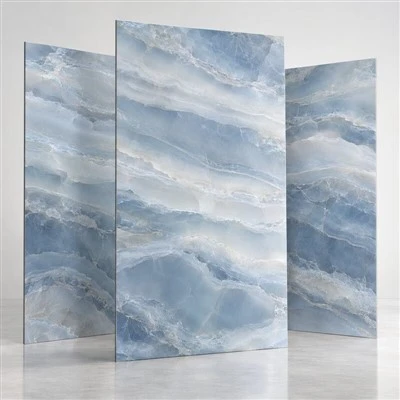
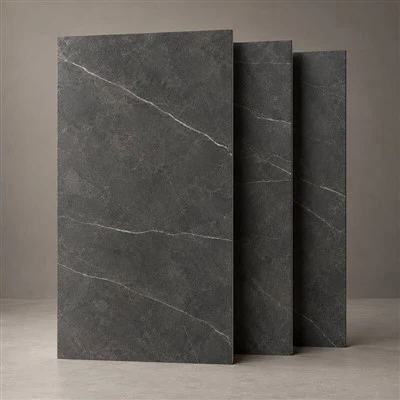
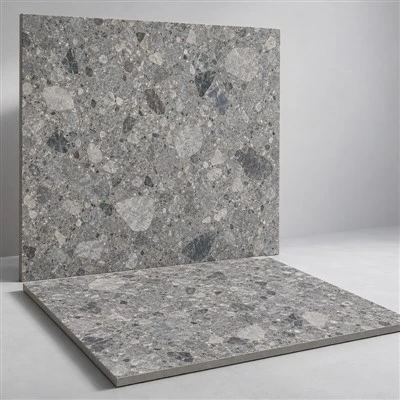
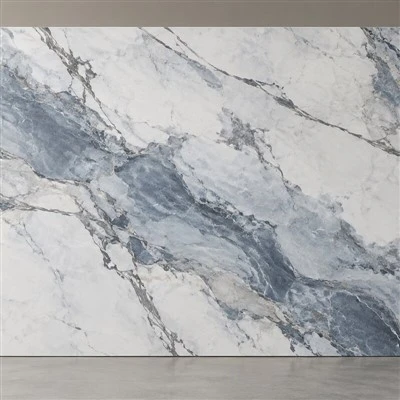
Modern sintered stone uses advanced digital decoration technology to reproduce realistic marble, granite, concrete, and natural stone textures.
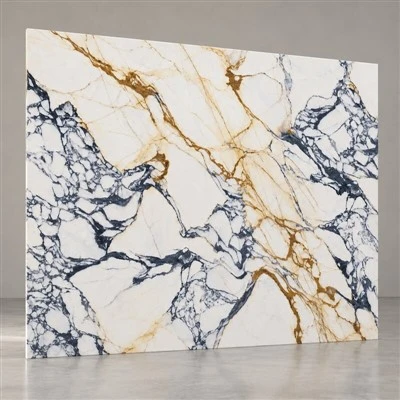
Premium Full Body Sintered Stone also provides continuous veining through the slab, creating a more natural appearance after fabrication.
For projects requiring waterfall islands or exposed edges, full-body slabs often produce a more seamless finish.
Fabrication
Quartz is generally easier to process because it is slightly less brittle during cutting.
Sintered stone requires professional fabrication equipment, diamond tools, and experienced technicians.
However, once fabricated correctly, sintered stone offers excellent long-term dimensional stability.
For large commercial projects, working with an experienced fabricator is more important than the material itself.
Maintenance
Neither material requires sealing.
Routine maintenance includes:
- Soft cloth
- Warm water
- Mild detergent
Avoid using abrasive cleaning pads on either surface.
Overall maintenance costs remain low throughout the product's lifespan.
Which Material Lasts Longer?
Both materials are designed for decades of service.
However, sintered stone has several advantages for demanding applications:
- Better resistance to thermal shock
- Better UV stability
- Excellent chemical resistance
- Superior performance outdoors
Quartz performs exceptionally well in standard indoor kitchens but is generally not recommended for exterior installations.
Cost Comparison
Pricing varies depending on:
- Brand
- Thickness
- Surface finish
- Fabrication requirements
- Country of origin
Premium full-body sintered stone may cost more than standard quartz due to its advanced manufacturing process and fabrication requirements.
However, for projects requiring long-term durability and outdoor performance, the additional investment may provide better overall value.
Which Countertop Is Best for Different Applications?
| Application | Recommended Material |
|---|---|
| Indoor Kitchen | Sintered Stone or Quartz |
| Luxury Kitchen Island | Full Body Sintered Stone |
| Bathroom Vanity | Either Material |
| Outdoor Kitchen | Sintered Stone |
| Commercial Restaurant | Sintered Stone |
| Hotel Reception Counter | Sintered Stone |
| Outdoor Bar | Sintered Stone |
| Apartment Projects | Depends on budget and design requirements |
Rather than asking which material is universally better, the more useful question is which material best suits the intended environment.
Frequently Asked Questions
Is sintered stone stronger than quartz?
Both materials offer excellent durability, but sintered stone generally provides better resistance to heat, UV exposure, and thermal shock.
Which countertop is easier to maintain?
Both require very little maintenance and do not need sealing.
Can quartz be used outdoors?
Most manufacturers recommend quartz for indoor use only because prolonged UV exposure may affect the resin over time.
Is sintered stone more expensive?
Pricing depends on the product specification and fabrication. Premium full-body slabs may cost more, while standard sintered stone products are often competitively priced.
Which material is better for a waterfall kitchen island?
Full Body Sintered Stone is often preferred because the veining continues through the slab, creating a more natural edge appearance.
Final Verdict
Both sintered stone and engineered quartz are excellent countertop materials, but they excel in different situations.
If your project focuses on indoor residential kitchens with a wide selection of colors and straightforward fabrication, quartz remains a reliable choice.
If you need exceptional heat resistance, outdoor durability, UV stability, or a premium marble-like appearance with full-body veining, sintered stone is often the better long-term investment.
Instead of selecting a material based solely on price, evaluate how the countertop will be used, the installation environment, and the desired design effect. Choosing the right material for the application will deliver better performance and greater value over time.