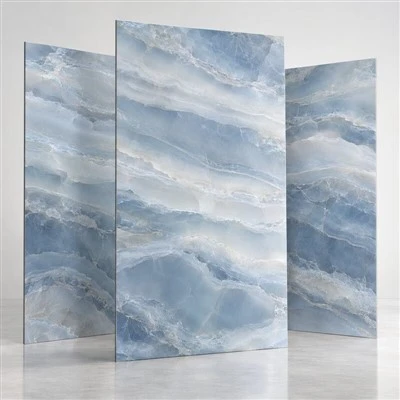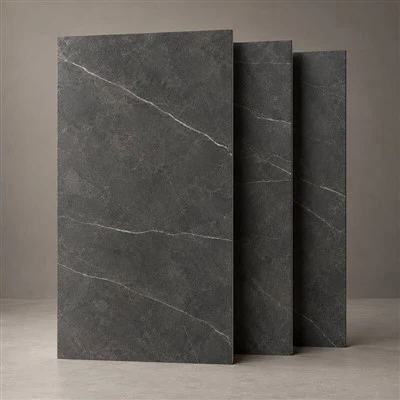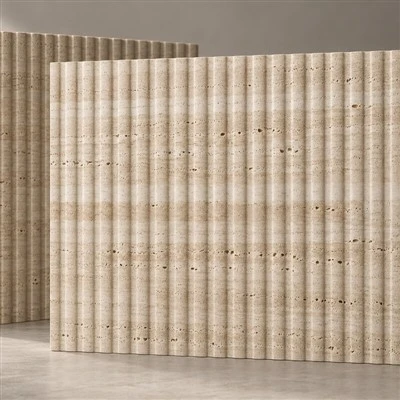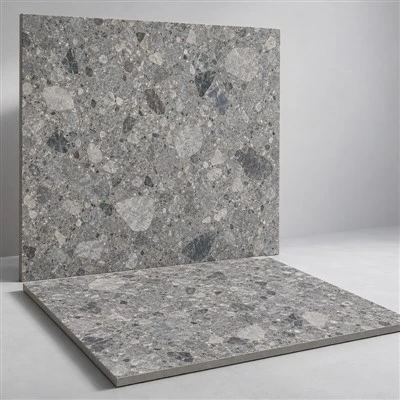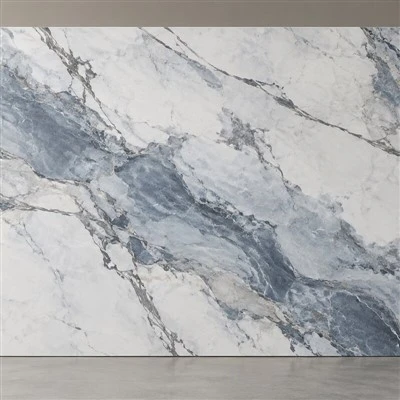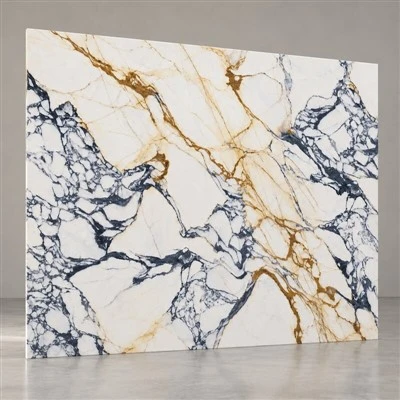
Sintered stone color trends for 2026 show a measurable shift toward low-gloss, mineral-based neutrals such as warm greys, refined creams, and high-fidelity marble-look surfaces. Driven by industrial design specifications in Europe and the USA, manufacturers use multi-channel digital ink injection coupled with Full-body tech to produce stable color compositions that maintain optical consistency under high-traffic and outdoor conditions. This technical forecast breaks down cross-regional color metrics, material formulations, and procurement yields for upcoming architectural projects.
Regional Color Demand & Pigment Composition Matrix
The following data outlines the verified color distribution and technical pigment requirements dominant in European and American commercial specifications for 2026.
| Trend Classification | European Market Share | USA Market Share | Pigment Basis | Gloss Unit (GU) Target | Primary Application |
| Warm Greys & Earth Tones | 34% | 28% | Iron/Manganese Oxides | 5 - 12 GU (Matte) | Exterior cladding, high-traffic floors |
| Creams & Calcified Alabaster | 26% | 31% | Zirconium/Titanium | 8 - 15 GU (Honed) | Kitchen counter surfaces, vanities |
| Marble Look (Calacatta/Statuario) | 22% | 25% | Cobalt/Chromium blends | 85+ GU (Polished) or Matte | Feature walls, reception desks |
| Industrial Micro-Cement | 18% | 16% | Calcined Silicates | 3 - 6 GU (Ultra-Matte) | Corporate office flooring, facades |
The Market Position of Marble-Look Sintered Stone
Despite the rise of monochromatic earth tones, marble-look sintered stone-specifically variations reproducing Calacatta, Statuario, and Nero Marquina vein structures-remains a core procurement asset, representing over 20% of aggregate global volume.
The 2026 technical refinement of marble-look surfaces focuses on vein depth. Rather than applying a topical surface print, high-tier production lines utilize synchronized powder distribution prior to entering the 30,000-ton press. This aligns the internal mineral veins with the surface pattern.
Color Fastness: The use of 100% inorganic mineral oxides ensures zero color shifting under direct ultraviolet exposure, yielding complete UV resistance for outdoor installations.
Aesthetic Alignment: The pattern repetition cycle is expanded to 8–12 distinct slab variants, allowing for complex Bookmatched slabs on large architectural surfaces without visual replication errors.
📩 Request a product sample now
Technical Execution of Warm Greys and Creams
The shift toward warm greys and cream colorways is tied to the evolution of matte surface micro-topography. To achieve a realistic mineral texture without sacrificing maintenance parameters, the following engineering adjustments are made during the Sintering technology phase:
Sintering Matrix Density: Slabs are pressed at pressures exceeding 450 kg/cm² to achieve a final density of > 2.4 g/cm³. This limits dirt encapsulation in the lower-gloss (5–12 GU) matte structures.
Chemical Resistance: The vitrified surface matrix achieves Class 5 stain resistance and a Mohs hardness of 6–7, ensuring that lighter cream surfaces resist metal marking from kitchen utensils or industrial baggage carts.
Thermal Stability: Slabs demonstrate excellent Thermal shock resistance, preventing localized discoloration or micro-fractures when installed as countertops directly adjacent to commercial cooking appliances.
FAQ: Architectural Color Specification
Do dark colors like Nero Marquina fade outdoors?
No. Sintered stone utilizes zero organic polymers or liquid binders. The pigmentation is achieved through natural mineral oxides fired at temperatures between 1,200°C and 1,280°C, rendering the dark matrix fully UV resistance and stable against solar bleaching.
What is the gloss tolerance across a batch of polished Calacatta slabs?
Industrial production control keeps gloss deviation within ±3 Gloss Units (GU) across an entire production run. This consistency prevents visual zoning when multiple polished panels are mounted adjacently on a flat wall surface.
How does full-body tech affect the appearance of mitered edges?
Full-body tech integrates base color minerals throughout the slab core. When a fabricator cuts a 45-degree miter for a kitchen island drop apron, the exposed joint looks uniform with the surface tone, avoiding the plain white line associated with low-grade surface-printed ceramics.