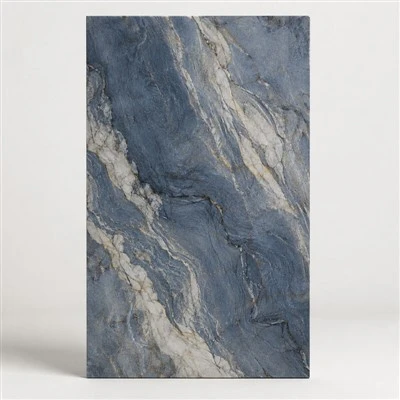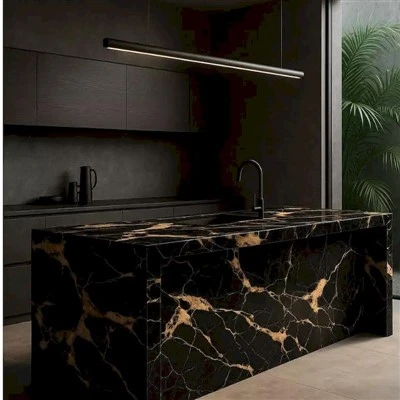
Importing sintered stone from China allows commercial buyers to scale inventory margins by accessing advanced Sintering technology lines at competitive volume pricing. Successful procurement requires rigorous validation of kiln infrastructure, structured metric auditing of physical samples, and balanced commercial payment terms to mitigate cross-border supply chain risks. For international wholesalers and engineering contractors, this operational report provides a technical roadmap for bulk sourcing.
Supplier Auditing and Machinery Verification
The primary risk when purchasing sintered stone from China is the operational variance between true sintered stone manufacturers and standard ceramic tile producers masquerading as slab suppliers. Sintered performance metrics depend directly on heavy industrial compaction.
When evaluating a Chinese supplier, procurement teams must verify the following plant assets:
| Verification Metric | Tier 1 Sintered Stone Manufacturer | Low-Cost Ceramic Alternative |
| Primary Compaction Equipment | 30,000-ton press (e.g., Sacmi Continua+) | Standard hydraulic press (<15,000 tons) |
| Kiln Temperature Capability | Continuous stabilization at 1,200°C – 1,280°C | Sub-1,150°C rapid firing profiles |
| Thickness Calibration Lines | Automatic diamond-head polishing & rectification | Minimal rectification; high edge tolerance |
| Aesthetic Capabilities | Synchronous powder injection for Full-body tech | Standard single-charge surface printing only |
Phase 2: Technical Sample Auditing Protocols
Never issue a commercial deposit based on digital catalog images or loose production swatches. Importers must execute a three-part laboratory audit on 300x300mm production-line samples before signing a purchase contract.
Porosity Verification: Weigh the dry sample, submerge it in boiling water for 5 hours, and re-weigh. The mass differential must show water absorption < 0.05%.
Mechanical Resistance Evaluation: Use a tungsten carbide scribe to confirm a Mohs hardness rating of 6–7. Surface marking indicates an un-vitrified matrix or cheap topical glaze.
Thermal Shock Resistance Check: Heat the sample to 200°C in an industrial oven and plunge it immediately into 15°C water. Repeat for 10 cycles; zero micro-fissuring or structural cleaving must occur.
Phase 3: Financial Structure and Payment Terms
Standard cross-border payment structures for bulk stone shipments follow a 30% T/T (Telegraphic Transfer) deposit / 70% Balance against Bill of Lading (B/L) framework. For large engineering contracts exceeding three containers, utilize an Irrevocable Letter of Credit (L/C at sight) to bind payment dispatch to strict third-party quality inspections at the loading port.
Ensure the sales contract explicitly states:
Dimensional Tolerance Restrictions: Length/Width within ±0.5mm; Flatness variation less than ±0.1mm.
Color Consistency Thresholds: Maximum ΔE (Delta E) chromatic deviation less than 0.5 between production batches to ensure seamless alignment of Bookmatched slabs.
Phase 4: Maritime Logistics and Customs Clearance
Sintered stone is dense (exceeding 2.4 g/cm³), meaning ocean freight logistics are governed by local port weight regulations rather than container volume limits.
Container Optimization: Pack slabs vertically on heavy-duty, reinforced wooden A-frames. A standard 20-foot Heavy Cargo container can accept 4 to 5 A-frames, capped at a maximum payload weight of 21,000 kg to 27,000 kg depending on target country road laws.
HS Code Standardization: Classify all shipments under HS Code 6810.19.00 (Articles of artificial stone) or 6907.23.00 (Ceramic flags and paving) depending on regional customs rulings. Incorrect classification leads to severe customs impoundments or punitive anti-dumping duties.
Transit Damage Protection: Mandate the addition of desiccant silica gel bags inside the container wrapper to prevent moisture condensation, protecting the UV resistance and polished surface finishes from chemical "sweating" inside high-humidity cargo holds.
FAQ: Cross-Border Stone Procurement
How do I distinguish a real manufacturer from a trading company?
Request a live video walkthrough of the kiln exit and press line. A true manufacturer will display a continuous ribbon-pressing system (30,000+ tons) and automated laser flatness scanners, rather than just packed crates in a separate logistics warehouse.
What is the standard production lead time for a multi-container order?
Standard manufacturing cycles for 1 to 3 containers require 20 to 25 days from deposit confirmation. This includes raw mineral milling, vacuum pressing, 1,200°C kilning, edge rectification, and heavy-duty A-frame wood crating.
How is on-site transit breakage handled in B2B contracts?
Contracts must contain an allowable transit damage clause (typically 1% to 2% of total slab volume). Any damage exceeding this threshold must be documented with container-seal photos and supported by an international third-party inspection report (e.g., SGS) to trigger factory replacement credits.