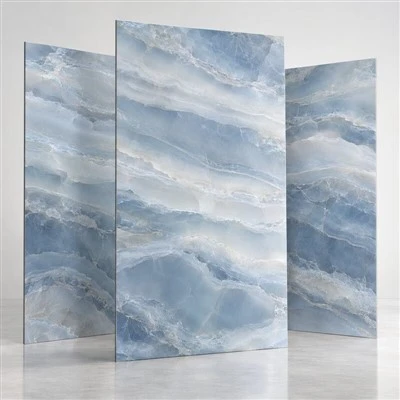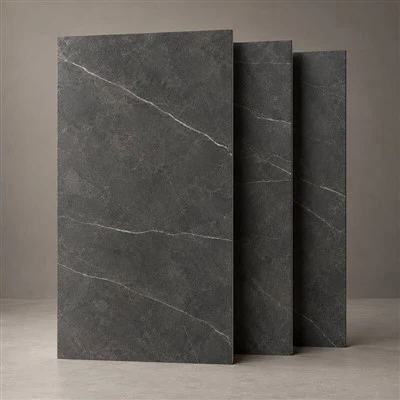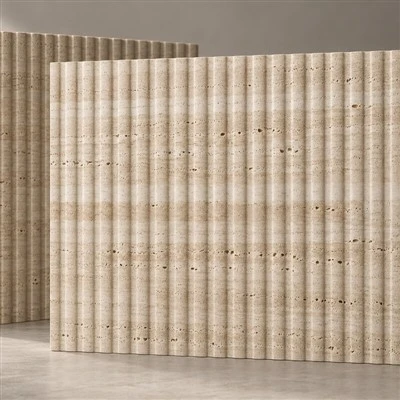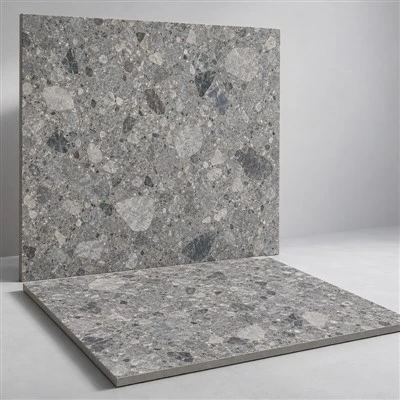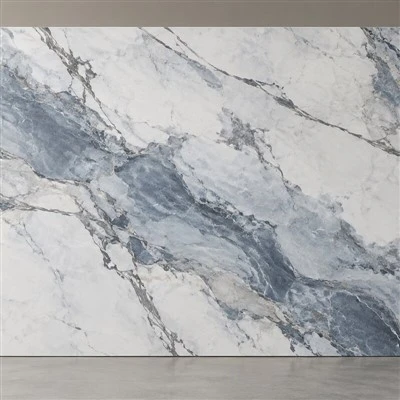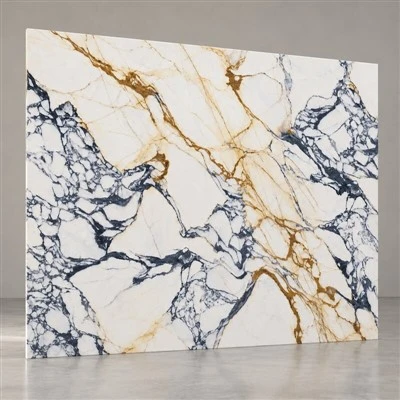
Sintered stone exhibits absolute thermal immunity under sudden temperature fluctuations, maintaining a structural threshold that withstands localized thermal shock up to a Delta T of 180°C under standard EN 14617-5 laboratory testing. Unlike resin-bound composites that undergo localized polymer degradation, this inorganic mineral slab remains structurally stable under direct contact with surfaces heated to 400°C. This performance profile provides a zero-failure solution for industrial kitchen countertops, laboratory benches, and high-exposure architectural facades.
The Laboratory Thermal Shock Testing Protocol
To verify Thermal shock resistance, random production samples from a 30,000-ton press undergo an automated testing cycle based on modified EN standards.
Baseline Conditioning: Slabs are held at a stabilized baseline room temperature of 20°C.
Thermal Spiking: A calibrated induction heating block heated to 200°C is placed in direct vertical contact with the surface for 20 minutes, simulating open-flame commercial cookware.
Cryogenic Quenching: The heated element is removed, and the surface is instantly doused with water at 15°C, completing a rapid cooling cycle within 5 seconds.
Microstructural Inspection: Slabs repeat this cycle 20 consecutive times before being analyzed under an optical microscope to detect micro-fissures or changes in gloss units (GU).
High-quality sintered stone shows zero visible structural cracking, checking, or surface flaking post-test, retaining 100% of its initial flexural strength.
Comparative Heat Resistance: Sintered Stone vs. Competitors
The root cause of sintered stone's high heat resistance is its manufacturing process. The Sintering technology fuses raw quartz, feldspar, and clays at temperatures up to 1,280°C. Because the material is completely inorganic, it contains no chemical components that can re-melt or scorch.
| Material Class | Thermal Failure Point | Mechanical Reaction to Heat | Surface Visual Defect |
| Sintered Stone | > 1,200°C | None (Non-combustible A1) | Zero change |
| Engineered Quartz | 135°C - 150°C | Resin matrix oxidation | Yellowing / Cracking |
| Acrylic Solid Surface | 80°C - 95°C | Polymer melting / Softening | Scorching / Deformity |
| Natural Granite | 500°C - 600°C | Internal mineral expansion | Hairline fissuring |
Micro-Structural Stress Management under Thermal Expansion
When localized heat is applied to a countertop, the heated zone expands while the surrounding cold zone remains rigid, creating mechanical shear tension. Sintered stone manages this through its ultra-high density (greater than 2.4 g/cm³) achieved by massive compaction.
Low Coefficient of Thermal Expansion: Minimizes the physical movement of the crystal lattice when heated.
Full-Body Tech Integration: Ensures uniform mineral distribution throughout the 12mm or 20mm slab core, allowing heat to dissipate evenly without separating the surface pattern from the backing.
Retention of Hardness: Exposure to high heat does not lower the material's Mohs hardness (6–7), ensuring the heated area remains scratch-resistant during use.
FAQ: Thermal Specification and Verification
Why do some synthetic stones crack when a hot pan is applied?
Engineered quartz and solid surfaces contain 7% to 25% organic resins or acrylic polymers. These binders degrade, discolor, and expand rapidly at temperatures above 150°C, causing localized structural cracking that cannot be polished out.
Can I view a heat test video or laboratory demonstration?
Yes. Contractors and architects can access our recorded testing library showing automated torch tests and induction heat cycles on our primary digital portal. This data substantiates material performance under localized commercial kitchen loads.
Does an exterior flame application degrade the UV resistance of the stone?
No. Sintered stone contains only inorganic mineral pigments fused via Sintering technology. Direct flame exposure does not alter the material's chemical structure, meaning its UV resistance and color stability remain fully intact after high-heat exposure.