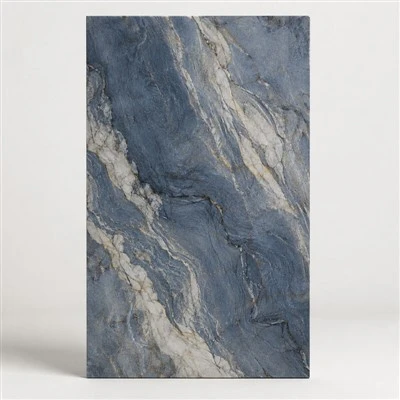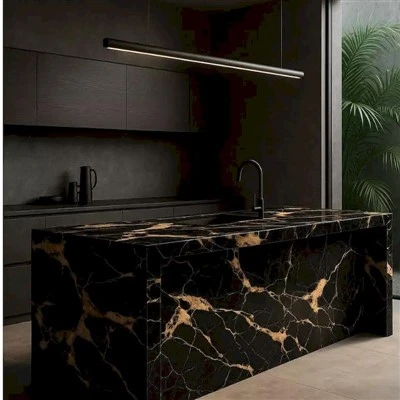
Sintered stone provides a measurable return on investment for wholesale importers by reducing site-installation claims and eliminating the need for periodic sealing or chemical maintenance. When sourced from manufacturers utilizing a 30,000-ton press, the material delivers consistent, non-porous slabs (water absorption < 0.05%) that minimize inventory loss due to material defects.
Market Trends and ROI Analysis
The global engineered stone market is projected to reach $30.32 billion in 2026, driven by a 4.6% CAGR. For wholesale distributors, the transition toward sintered stone is a move to capture the high-end commercial sector-specifically projects requiring high Thermal shock resistance and UV resistance.
| ROI Metric | Natural Stone (Marble/Granite) | Sintered Stone (12mm/20mm) |
| Maintenance Cost | High (Annual sealing) | Near Zero |
| Defect/Waste Rate | 5% - 15% (Natural fissures) | 1% - 3% (Engineered consistency) |
| Installation Liability | High (Staining/etching claims) | Low (Chemical/Thermal inertness) |
| Market Positioning | Commodity | Premium Architectural |
Distributors experience higher long-term margins by reducing the "after-sales cost"-the expense incurred when natural stone fails due to porosity or chemical reactions.
Value Proposition for Wholesale Sourcing
Sourcing sintered stone from specialized Chinese manufacturers provides direct access to high-volume production lines that utilize Sintering technology identical to European counterparts but at a lower price per square meter.
Manufacturing Consistency: Modern lines use Full-body tech and multi-channel inkjet printing, ensuring Bookmatched slabs remain uniform across large-scale logistics shipments.
Scalability: Advanced production facilities in China can fulfill multi-container orders with precise batch matching, preventing the color variation issues often found in natural stone blocks.
Performance Baseline: Standardized quality control protocols in these facilities ensure every slab achieves a Mohs hardness of 6–7, ensuring that bulk inventory remains durable in high-traffic commercial environments.
Procurement Advisory: Wholesale importers should prioritize suppliers who provide third-party verification of firing temperatures and density. Request a batch testing report to ensure your inventory meets international engineering standards.
Strategic Recommendations for Distributors
To maximize profitability, distributors should focus on these three areas:
Inventory Specialization: Focus on 12mm and 20mm thicknesses for the most resilient commercial applications.
Project Documentation: Provide architectural firms with technical data sheets. Offering proof of Thermal shock resistance and fire ratings (A1) wins bids for large engineering contracts that smaller, less technical competitors lose.
Logistics Planning: Sintered stone is dense. Optimize shipping costs by utilizing full-container-load (FCL) strategies, leveraging the material's ability to be stored vertically without deterioration.
FAQ: Wholesale Procurement Insights
Is sintered stone inventory more profitable than quartz?
Yes, for the high-end commercial segment. While quartz is a lower-cost commodity, sintered stone's UV and thermal properties allow for outdoor and heavy-duty use, enabling distributors to charge a premium in sectors where quartz fails due to resin degradation.
What is the risk of "cheap" sintered stone?
Low-cost alternatives often utilize lower pressing forces (e.g., < 20,000 tons). This results in internal micro-fissures that lead to slab breakage during on-site fabrication. Always verify the press tonnage of your supplier's machinery.
How do I differentiate quality in bulk shipments?
Inspect the edge profile and the consistency of the Full-body tech. High-quality slabs have color and vein structure that penetrate through the entire thickness, whereas inferior products have a "printed" look that chips easily on the edges.