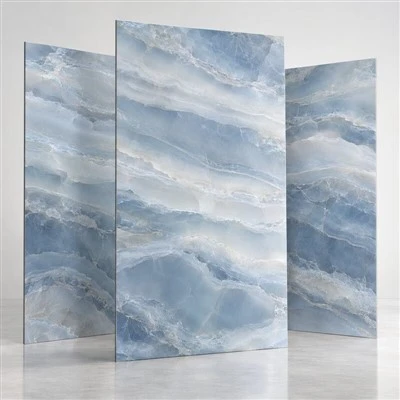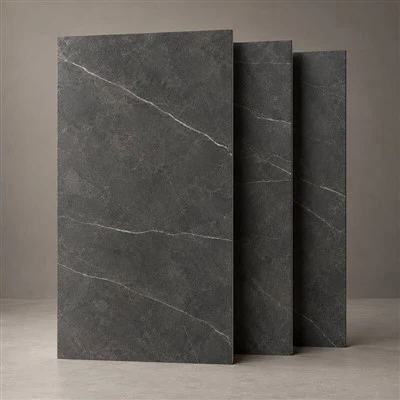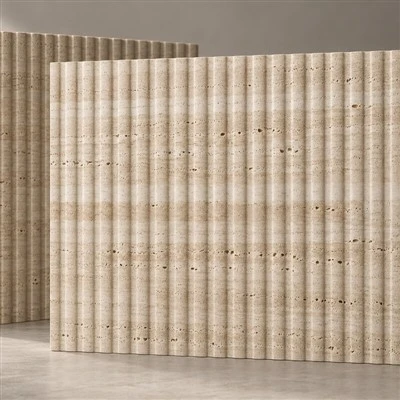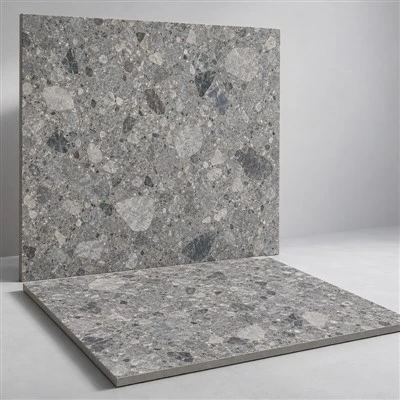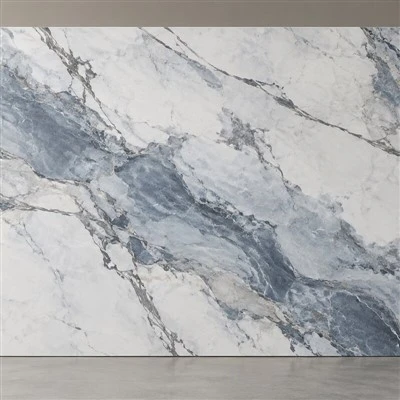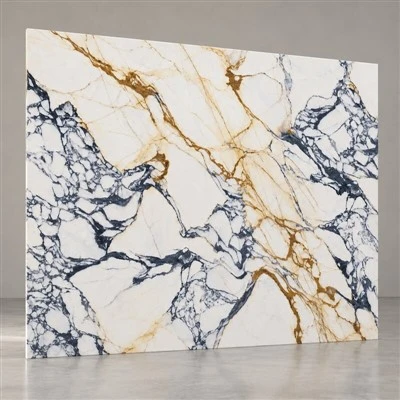
Sintered stone is a high-density vitrified mineral slab engineered under a 30,000-ton press, delivering a water absorption rate of < 0.05% that renders it completely stain-immune without chemical sealants. While granite provides high compressive strength as a natural stone alternative, its native porosity (0.2%–0.6% absorption) and geological inconsistency introduce structural vulnerabilities and color variances across large-scale commercial facades and flooring layouts. Sintered stone eliminates these variables, ensuring structural and aesthetic uniformity across multi-container procurements.
Technical Performance Matrix: Sintered Stone vs. Granite
The following data represents comparative laboratory testing according to EN and ASTM standards for 12mm and 20mm architectural slabs.
| Performance Parameter | Sintered Stone (12mm/20mm) | Commercial Granite (Standard) |
| Water Absorption Rate | < 0.05% | 0.20% - 0.60% |
| Mohs Hardness | 6 - 7 | 5 - 6 |
| Flexural Strength | ≥ 50 N/mm² | 10 - 15 N/mm² |
| Weight (per m² at 12mm) | Approx. 30 kg | Approx. 34 - 36 kg |
| Color Variance (Delta E) | ΔE < 0.5 (Batch-to-batch) | Highly variable (Geological shifting) |
| UV Resistance | 100% (Inorganic pigments) | High (Susceptible to iron oxidation) |
| Chemical Maintenance | Zero sealing; pH 1-13 stable | Annual sealing required; acid-sensitive |
Stain Resistance and Surface Porosity Analysis
The vitrification phase of Sintering technology eliminates interconnected pores within the mineral matrix. This prevents liquid hydrocarbons, organic dyes, and industrial acids from penetrating the surface. Granite contains natural micro-fissures and capillary pathways that absorb moisture, leading to deep subsurface staining and biological growth unless treated with a resin or fluorocarbon sealer every 12 months. Sintered stone requires zero chemical sealing, lowering life-cycle maintenance overhead for commercial facilities.
B2B Engineering Advisory: Minimizing material degradation in high-traffic applications requires verified physical metrics. Download our 2026 Slab Catalog or contact our technical office to request a batch testing report for your project submittals.
Structural Weight and Flexural Strength Optimization
Sintered stone maintains a flexural strength metric three times greater than granite (≥ 50 N/mm² vs 10–15 N/mm²). This mechanical performance allows manufacturers to produce 6mm and 12mm slabs that match or exceed the structural load capacity of a 20mm granite slab.
Dead Load Reduction: Utilizing 6mm sintered stone (15 kg/m²) instead of 20mm granite (approx. 55 kg/m²) for exterior wall cladding reduces the dead load on the building's structural frame by over 70%.
Logistical Optimization: Thinner profiles increase container loading capacity, allowing up to 320 slabs of 6mm material per 20-foot container compared to roughly 120 slabs of 20mm granite.
Color Consistency and Pattern Control
Granite extraction is dictated by geological chance, meaning natural blocks exhibit drastic changes in vein trajectory and background hue across a single quarry face. Sintered stone utilizing Full-body tech and digital mineral injection ensures strict color calibration (ΔE < 0.5). This allows architects to specify Bookmatched slabs and continuous veining across thousands of square meters without pattern interruption or batch rejection.
Sustainability Profile (LCA)
Granite quarrying yields significant material waste, with up to 60% of extracted stone rejected due to natural structural fissures. Sintered stone production is a closed-loop process incorporating up to 40% recycled pre-consumer minerals. Sintered slabs emit zero volatile organic compounds (VOCs) and are 100% recyclable into aggregate at end-of-life.
FAQ: Architectural Specifications
Why does sintered stone have higher scratch resistance than granite?
The high compaction force of the 30,000-ton press forces the raw quartz and feldspar crystals into a denser configuration. This increases the surface Mohs hardness to a rating of 6–7, making it highly resistant to metal abrasions and industrial foot traffic.
Can sintered stone replace granite in high-UV exterior facades?
Yes. Sintered stone features 100% UV resistance because it utilizes inorganic mineral oxides without resin binders. Unlike granite, which can contain trace iron particles that rust and discolor under outdoor weathering, sintered stone remains colorfast indefinitely.
Is fabrication harder for sintered stone compared to granite?
Yes. Due to its dense vitrified structure and internal tension, fabricators must use specific diamond blades, continuous water-feed cooling (minimum 35 L/min), and designated stress-relief cut paths to prevent edge cracking during processing.