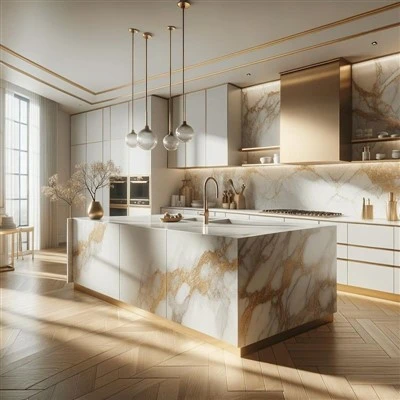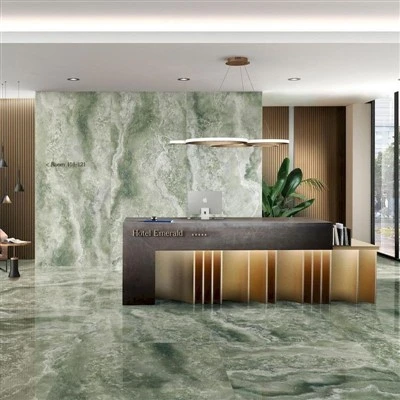
Sintered stone is a zero-porosity mineral surface engineered through a 30,000-ton press and fired at 1,200°C, rendering it highly effective as an antimicrobial surface for medical facilities. With a water absorption rate of < 0.05%, it prevents the penetration of blood, pathogens, and chemical reagents into the structural matrix. For hospital administrators and laboratory procurement directors, it provides a non-porous alternative to traditional solid surfaces and natural stone that eliminates microbial colonization without chemical off-gassing.
Technical Performance Profile for Medical Environments
Healthcare surfaces must endure constant exposure to biological contaminants and aggressive disinfection protocols. The structural composition achieved via Sintering technology addresses these requirements through quantifiable material metrics.
| Performance Metric | Sintered Stone | Engineered Quartz | Medical Grade Laminate |
| Water Absorption Rate | < 0.05% (Impervious) | < 0.10% | Variable (Edge swelling risk) |
| Bacterial Growth Support | 0.0% (Inorganic matrix) | Low | Moderate (At joints/scratches) |
| Chemical Resistance (pH 1-13) | Class UA (Resistant) | Vulnerable to solvents | Blistering risk |
| Mohs Hardness | 6 - 7 | 6 - 7 | 2 - 3 |
| Fire Rating (EN 13501-1) | A1 (Non-combustible) | B-s1, d0 (Combustible) | Class III |
Zero-Porosity and Infection Control Mechanics
The primary vector for hospital-acquired infections (HAIs) on surface finishes is material porosity. Natural stones contain micro-fissures that harbor pathogens even after surface wiping. Sintered stone undergoes ultra-high-density compaction which eliminates internal air pockets.
Because the material is mineralogically sealed, bacteria, viruses, and molds cannot find anchor points or moisture to sustain cellular division. It complies with international hygiene standards, including NSF/ANSI 51 for food zone allocation, guaranteeing that the surface remains bacteriostatic throughout its life cycle.
Decontamination and Chemical Resistance
Hospital maintenance requires the use of concentrated disinfectants, including sodium hypochlorite, isopropyl alcohol, and hydrogen peroxide vapor. Sintered stone displays zero chemical reactivity to these agents.
Unlike resin-bound materials that degrade or discolor when exposed to medical-grade solvents, the inorganic composition of sintered stone preserves its surface integrity. Furthermore, its extreme Thermal shock resistance allows for high-pressure steam sterilization in surgical preparation areas without risking surface checking or delamination.
Laboratory Worktop and Specialized Cladding Applications
The physical parameters of sintered stone make it suitable for high-exposure medical zones:
Laboratory Workbenches: 12mm and 20mm slabs resist staining from iodine, methylene blue, and concentrated acids, preserving clean sightlines for diagnostic work.
Surgical Wall Linings: 3mm and 6mm large-format panels minimize the frequency of horizontal grout lines, which are traditional failure points for biological accumulation.
Reception and High-Traffic Counters: Slabs featuring Full-body tech maintain their appearance even under the constant friction of medical carts, retaining a Mohs hardness of 6–7.
UV Stability: For clinics utilizing automated UV-C sterilization robots, the inherent UV resistance of the stone ensures zero discoloration or structural yellowing over decades of radiation exposure.
FAQ: Medical Specification & Engineering
How does sintered stone prevent cross-contamination compared to quartz?
Quartz contains 7%–10% resin binders which can be degraded by specific medical solvents, creating microscopic pits where bacteria multiply. Sintered stone is 100% resin-free; its vitrified surface remains smooth and cleanable under harsh chemical cleaning.
Can large-format panels be installed with flush joints in operating theaters?
Yes. For operating environments, 6mm slabs are installed using high-performance polyurethane adhesives. The joints are filled with chemical-resistant epoxy grout and leveled mechanically to ensure a flat, monolithic surface that prevents dirt accumulation.
Does the material release volatile organic compounds (VOCs) during sterilization?
No. Sintered stone is composed entirely of natural, inorganic minerals and fired at 1,200°C. It contains zero organic compounds, polymers, or plasticizers, ensuring zero VOC emission or off-gassing during thermal or chemical sterilization processes.