Introduction
As sintered stone becomes more popular in kitchens, batbrooms, furniture, and architectural projects, buyers are seeing new terms such as Full Body Sintered Stone, Tbrough Body Sintered Stone, and Surface Printed Slabs.
These terms are often used in marketing, but they do not always describe the same manufacturing technology. Choosing the wrong type can affect appearance, fabrication results, project cost, and long-term performance.
This guide explains what full body sintered stone really is, how it differs from surface printed slabs, and which option is best for different applications.
What Is Full Body Sintered Stone?
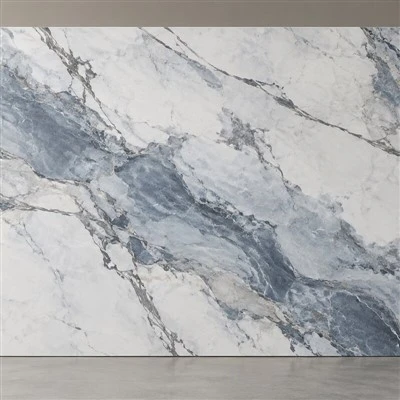
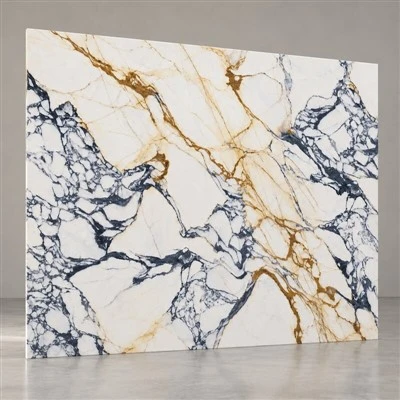
Full Body Sintered Stone is a slab in which the decorative pattern extends beyond the surface and continues into the body of the material. When the slab is cut, polished, or profiled, the exposed edges display a pattern that closely matches the surface.
Unlike conventional decorative slabs, the visual effect remains consistent after fabrication, making it an excellent choice for premium countertops, waterfall islands, stair treads, and furniture.
The goal is not only to create a marble-like surface but also to maintain a natural appearance from every viewing angle.


What Are Surface Printed Sintered Stone Slabs?
Surface printed slabs use high-resolution digital printing technology to reproduce the appearance of marble, granite, concrete, or other decorative materials.
The decorative layer is applied only to the surface before firing. The body of the slab usually has a neutral color rather than matching the printed pattern.
For many wall and flooring applications, this manufacturing method provides excellent visual performance at a more economical cost.
Full Body vs Surface Printed: What's the Difference?
| Feature | Full Body Sintered Stone | Surface Printed Slabs |
|---|---|---|
| Veining Tbrough Thickness | Yes | No |
| Edge Appearance | Matches surface pattern | Core color may be visible |
| Fabrication Quality | Excellent | Good |
| Waterfall Countertops | Excellent | Acceptable with edge treatment |
| Decorative Walls | Excellent | Excellent |
| Manufacturing Cost | Higher | More economical |
| Luxury Projects | Recommended | Suitable for standard projects |
The biggest difference is not durability. Both products offer excellent mechanical performance.
The main distinction is how the slab looks after cutting and edge processing.
Why Full Body Technology Matters
During fabrication, slabs are cut into countertops, vanity tops, tables, and stair treads. Exposed edges become visible after polishing.
With a standard printed slab, these edges may reveal a solid-colored core that differs from the surface pattern. Fabricators often use mitred edges or additional processing to create a more seamless appearance.
Full body sintered stone minimizes this visual contrast by extending the pattern deeper into the slab, producing a more realistic and continuous stone effect.
This advantage is especially noticeable in luxury interior projects where design details are closely inspected.
Is Full Body Sintered Stone Stronger?
Not necessarily.
Many buyers assume that full body slabs are mechanically stronger than surface printed slabs. In reality, strength depends on factors such as:
- Raw material quality
- Manufacturing process
- Sintering temperature
- Slab thickness
- Density
- Quality control
A premium surface printed slab can perform just as well as a full body slab in terms of heat resistance, scratch resistance, and structural stability.
The main benefit of full body technology is appearance rather than mechanical strength.
When Should You Choose Full Body Sintered Stone?
Full body slabs are ideal when exposed edges are an important design feature.
Recommended applications include:
Kitchen Countertops
Waterfall islands and visible countertop edges benefit from continuous veining.
Batbroom Vanity Tops
Integrated vanity designs achieve a cleaner, more luxurious appearance.
Dining Tables
Edge consistency enhances the overall furniture design.
Staircases
Visible risers and step edges appear more natural.
Luxury Commercial Projects
Hotels, villas, premium retail stores, and reception counters often specify full body slabs for a refined finish.
When Are Surface Printed Slabs the Better Choice?
Surface printed slabs remain an excellent option for many projects.
They are particularly suitable for:
- Interior wall cladding
- Large feature walls
- Flooring
- Exterior facades
- Decorative panels
- Commercial projects with strict budgets
When exposed edges are minimal, the visual difference between the two products is often negligible.
Does Full Body Mean Tbrough Body?
Not always.
This is one of the most misunderstood terms in the industry.
Full Body generally means the edge appearance closely matches the surface pattern.
Tbrough Body usually refers to decorative particles or colors distributed tbroughout the entire slab thickness during manufacturing.
Different manufacturers may use these terms differently, so buyers should always request fabrication samples instead of relying only on product descriptions.
How to Identify Genuine Full Body Sintered Stone
Before placing an order, ask your supplier for:
- Photos of polished slab edges
- Cross-section images after cutting
- Fabrication samples
- Videos showing edge finishing
- Project photos with visible countertop edges
These materials provide a more accurate indication of the final appearance than surface photos alone.
Which One Offers Better Value?
The answer depends on the project.
Choose Full Body Sintered Stone if your priority is:
- Luxury residential interiors
- Premium kitchens
- Waterfall islands
- Designer furniture
- High-end hospitality projects
Choose Surface Printed Slabs if your priority is:
- Large wall installations
- Commercial developments
- Budget-conscious projects
- Decorative surfaces with limited exposed edges
Both materials deliver excellent durability, low maintenance, and long service life when manufactured to a high standard.
Frequently Asked Questions
Is full body sintered stone worth the extra cost?
If your project includes visible edges, waterfall countertops, or luxury furniture, the improved edge appearance often justifies the additional investment.
Does full body sintered stone require sealing?
No. Like other sintered stone products, it has a non-porous surface and does not require sealing.
Is full body better for kitchen countertops?
Yes. Continuous veining creates a more natural appearance around exposed edges and waterfall designs.
Can surface printed slabs be used for countertops?
Absolutely. Many residential and commercial countertops are successfully manufactured from surface printed slabs, particularly when edge treatments are used.
Which option is more suitable for wall cladding?
For most wall applications, surface printed slabs provide an excellent balance between aesthetics and cost because exposed edges are limited.
Conclusion
Full body sintered stone and surface printed slabs share many of the same performance characteristics, including durability, stain resistance, heat resistance, and low maintenance. The key difference lies in how the decorative pattern appears after cutting and fabrication.
If your project emphasizes exposed edges, seamless waterfall designs, or luxury detailing, full body sintered stone offers a more natural and refined finish. For large wall panels, flooring, and budget-sensitive commercial projects, high-quality surface printed slabs remain a practical and visually appealing choice.
Understanding these differences allows architects, designers, fabricators, and homeowners to select the material that best matches both their design goals and project budget.