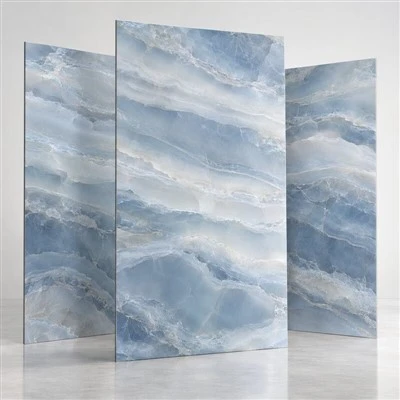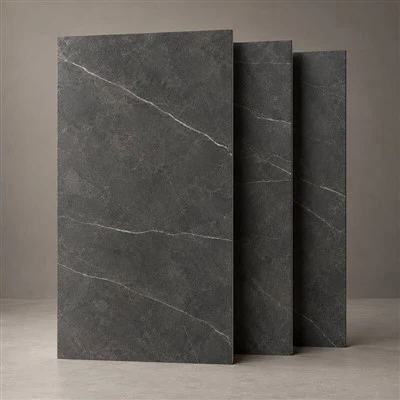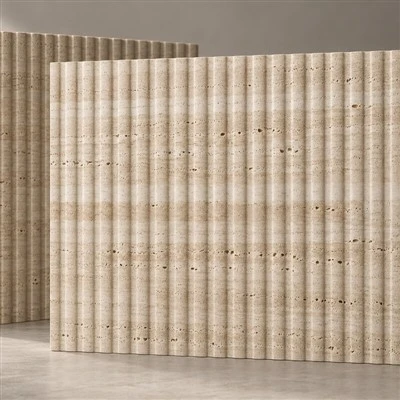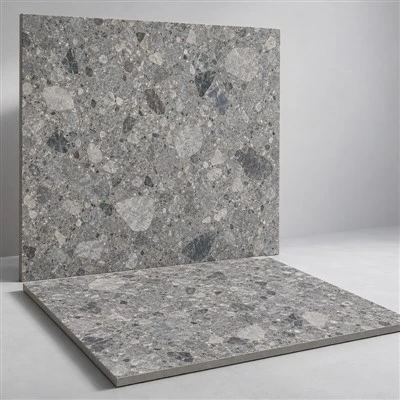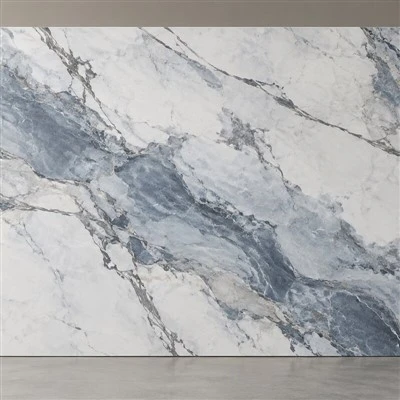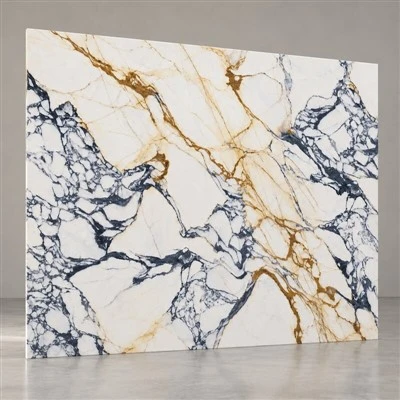
Replacing natural marble with sintered stone reduces total project procurement costs by 22% to 45% across large-scale commercial installations. While the raw material price per square meter can be comparable for premium grades, sintered stone eliminates financial risks associated with natural structural fissures, high fabrication waste rates (up to 30%), and mandatory annual chemical sealing expenses.
Comprehensive Cost and Lifecycle Matrix
The following data reflects average financial and structural metrics compiled from commercial hospitality projects over a 10-year operational lifecycle.
| Cost & Performance Parameter | Sintered Stone (12mm / 20mm) | Premium Natural Marble (Calacatta / Carrara) |
| Average Material Cost (fob China) | $35 – $85 / m² | $70 – $250+ / m² |
| Fabrication & Cutting Waste Rate | 3% – 5% (Engineered uniformity) | 15% – 30% (Natural faults & veining limits) |
| Initial Sealing Cost (On-Site) | $0.00 / m² | $15.00 – $35.00 / m² |
| Annual Maintenance Expense | $0.00 / m² (Water & neutral soap) | $5.00 – $12.00 / m² (Periodic resealing) |
| Mohs Hardness Rating | 6 – 7 | 3 – 4 |
| Project Replacement Lifecycle | 20+ Years (Zero fading/cracking) | 7 – 12 Years (Due to deep staining/etching) |
Material Yield Optimization and Waste Mitigation
The primary driver of the initial cost variance between the two materials is the fabrication yield. Natural marble blocks contain unmapped geological structural variants, fractures, and iron deposits that require fabricators to over-order material by 20% to 30% to guarantee pattern continuity.
Sintered stone, processed via a 30,000-ton press, features an engineered body free of internal micro-fissures. This uniformity allows nested CNC programming to maximize layout configurations, keeping material waste below 5%. Furthermore, industrial print heads allow for continuous Bookmatched slabs with absolute geometric pattern accuracy, avoiding the costly labor required to match natural stone segments manually.
Operational Lifecycle and Maintenance Overhead
Natural marble consists primarily of calcium carbonate (CaCO3), making it highly susceptible to acid etching from common substances (citrus, alcohol, commercial cleaners) and moisture staining due to an absorption rate of 0.2% to 0.6%. To mitigate this, marble requires professional chemical sealing every 12 months.
Sintered stone uses high-temperature Sintering technology to reduce surface porosity to < 0.05%. This vitrified surface eliminates structural absorption and chemical reactivity:
- Chemical Resistance: Resistant to industrial detergents, acids, and alkalis, removing specialized cleaning product costs from facility budgets.
- Thermal Shock Resistance: Withstands direct contact with objects up to 1,200°C, eliminating the cracking risks that natural marble faces during sudden temperature deltas.
- Exterior Stability: Features 100% UV resistance through inorganic pigments, preventing the color degradation that marble undergoes when specified for exterior ventilated rainscreens.
Long-Term Durability and Replacement Valuation
With a Mohs hardness of 6–7, full-body sintered stone cannot be scratched by standard steel instruments, whereas marble (Mohs 3–4) scratches under minimal mechanical load. Over a 20-year commercial lifecycle, natural marble surfaces in high-traffic installations typically require two full mechanical regrinding and polishing interventions, or complete replacement. Sintered stone eliminates these capital expenditure cycles, retaining its original gloss units and structural density indefinitely.
FAQ: Commercial Sourcing & Economics
Why is the initial shipping cost of sintered stone lower than marble?
Sintered stone can be manufactured reliably at a 6mm or 12mm thickness while maintaining high structural strength. Natural marble requires a minimum thickness of 20mm to prevent transit cracking, which doubles the structural dead weight and increases ocean freight costs per square meter by 40% to 50%.
Does the high hardness of sintered stone increase fabrication labor costs?
Yes. Due to its high density, it requires specialized diamond blades and slower CNC feed rates than marble. However, this initial fabrication cost increase is fully offset by the 20% reduction in raw material waste and the elimination of on-site sealing costs.
How does full-body tech affect the material's financial value?
Slabs utilizing Full-body tech maintain pattern distribution through the entire core. If an edge is chamfered or minor mechanical impact occurs in high-traffic zones, the exposed interior looks identical to the surface, avoiding the complete slab replacement costs associated with surface-printed alternatives.