1. High Strength and Durability
The production process of sintered stone involves high-temperature and high-pressure treatment, resulting in extremely high strength and durability. Compared to traditional tiles or natural stone, sintered stone is less prone to cracking or wear and can withstand the pressure of heavy objects and daily wear and tear.
2. Heat Resistance and Fire Resistance
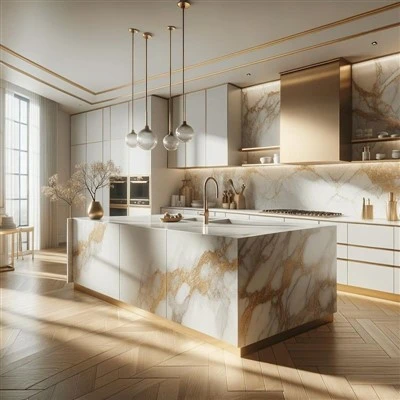
Sintered stone can withstand high temperatures and does not easily burn or release harmful gases, making it ideal for use in areas requiring heat resistance, such as kitchen countertops and fireplace surrounds.
3. Water Resistance and Stain Resistance
Due to its dense surface, sintered stone has excellent water and stain resistance. Liquids do not easily penetrate, making it easy to clean and maintain, and suitable for damp environments such as bathrooms and kitchens.
4. Environmental Friendliness
Sintered stone is manufactured without the use of any harmful chemicals, and its raw materials mainly come from natural minerals, making it an environmentally friendly material. Using sintered stone helps reduce the environmental impact.
5. Diverse Design Options
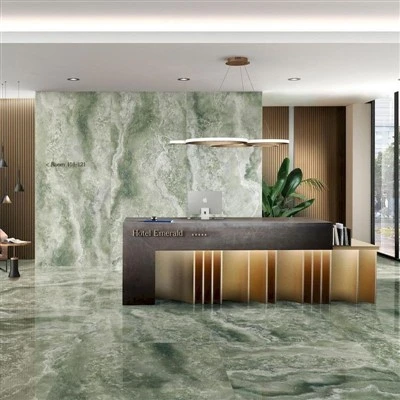
Sintered stone can mimic the textures and colors of various natural stones, such as marble and granite, and can also be designed with unique patterns and colors according to specific needs. Its design versatility allows it to meet the decorative needs of different styles.
6. Lightweight and Thin
Sintered stone is typically lighter and thinner than natural stone, making it easier to transport and install. This characteristic makes it an ideal choice for wall, floor, and furniture surface decoration.